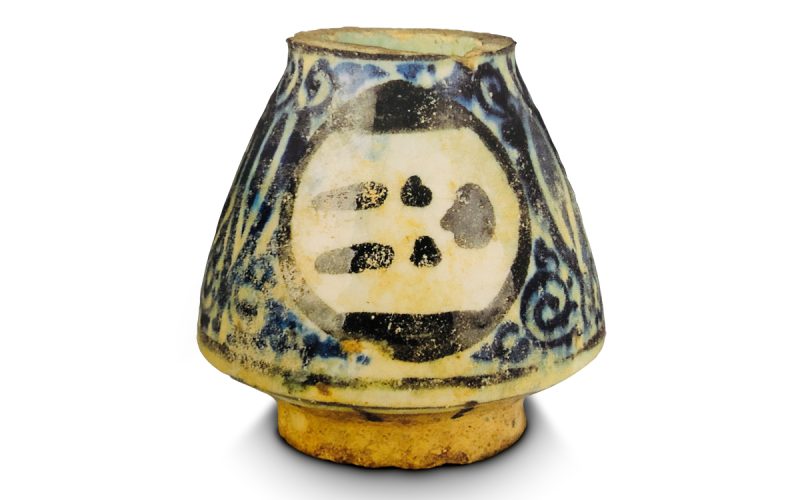
Inkwell

- The national museum of Damascus – متحف دمشق الوطني

Description

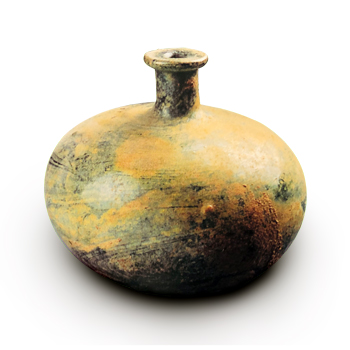
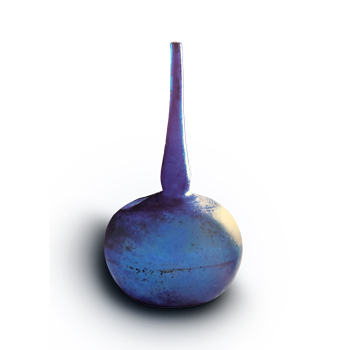
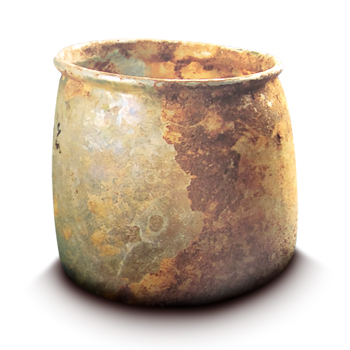
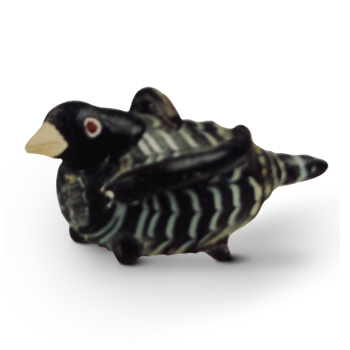
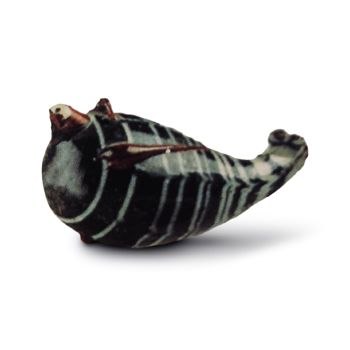
The black ink used by those who copied Arabic manuscripts was made with mixture of soot and water to which acacia resin, known as gum arabic, was added to keep the texts from fading. Red ink was obtained by adding powdered ochre. Given the ring-like base of the inkwell and the absence of a lustrous coating on its surface, it seems likely that this object was placed in a stand like the one shown in 380. The base could have been set into one of the circular openings to keep the inkwell from moving. The stand might have held another similar pot, but this one would have contained water to dilute the ink from time to time throughout the long hours of copying.
  • Site: DAMASCUS

  • Date: AD 1300

  • Material: Faience

  • Item Dimensions: 10.5 x 10 cm

  • Archaeological Mission:

  • National Museum Of Damascus (2011) – Museum Number: DAMASCUS 2730 A

  • VMS Code: Dam 065-5

Excavation Site Location

Your Content Goes Here

  • Syria: land of civilizations / Michel Fortin; Musée de la civilisation (Québec) – Syria’s ministry of culture – 1999

Your Content Goes Here

  • Michel Fortin’s Syria, Land of Civilizations المديرية العامة للآثار والمتاحف – وزارة الثقافة، الهيئة السورية للكتاب (1999)

Not every record you will find here is complete. More information is available for some works than for others, and some entries have been updated more recently. Records are frequently reviewed and revised, We welcome any additional information you might have.

Record Completion 70%