Mosaic

- The national museum of Damascus – متحف دمشق الوطني

Description

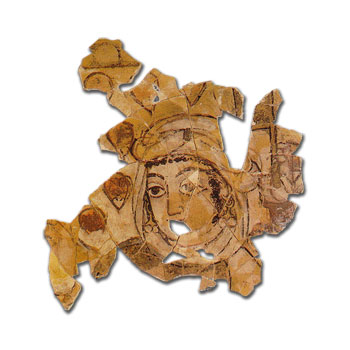
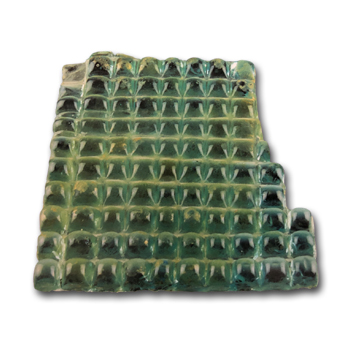
This fragment belonged to one of the mosaics that decorated the walls of the Umayyad Mosque in Damascus. The mosaics were made by Byzantine artists sent from Constantinople by the Emperor at the request of the caliph.

Although the technique they used was Byzantine, the motifs were not. There are imaginary landscapes and villas – the paradise promised to the chosen – but no living creatures are shown, in accordance with Koranic precepts. Between 706 and 714, the Umayyad caliph al Walîd (705 –715) built a large mosque at Damascus modeled on that of the Prophet in Medina. However, the one at Damascus was the first mosque in the Muslim world to have a minaret, a mihrab built in the qibla wall in the direction of Mecca, which was faced for prayers), a maqsûra, an ablutions fountain and rooms.

  • Site: DAMASCUS: UMAYYAD MOSQUE

  • Date: AD 710

  • Material: Tesserae of gold-backed glass and colored stones

  • Item Dimensions: 77 x 77 cm

  • Archaeological Mission:

  • National Museum Of Damascus (2011) – Museum Number: SMC 297

  • VMS Code: Dam 092-5

Excavation Site Location

  • Syria: land of civilizations / Michel Fortin; Musée de la civilisation (Québec) – Syria’s ministry of culture – 1999

Your Content Goes Here

Your Content Goes Here

  • Michel Fortin’s Syria, Land of Civilizations المديرية العامة للآثار والمتاحف – وزارة الثقافة، الهيئة السورية للكتاب (1999)

Not every record you will find here is complete. More information is available for some works than for others, and some entries have been updated more recently. Records are frequently reviewed and revised, We welcome any additional information you might have.

Record Completion 70%