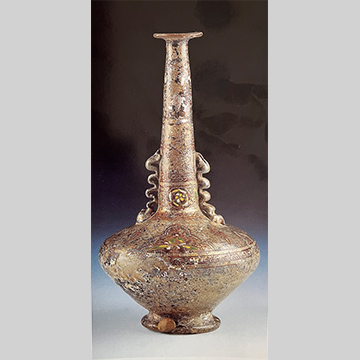
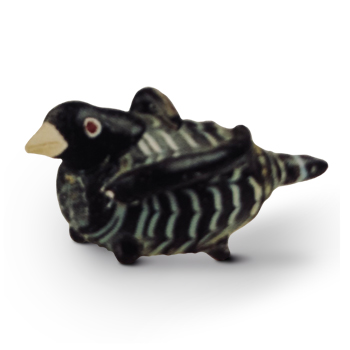
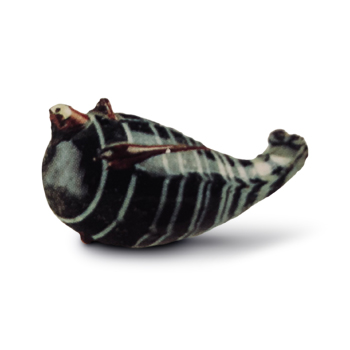
Sprinkler Blue blown glass

- The national museum of Damascus – متحف دمشق الوطني

Description

This type of flask, characterized by a globular body and a long, slender neck tapering towards the opening, was used to sprinkle perfumed water on the hands and faces of guests. The gesture was not only a mark of welcome and hospitality, but also a means of driving evil spirits out of the house being visited. The most popular perfumed water used in Syria was rosewater; Damascus was such a famous center of rosewater production that the rose became the city’s emblem. Because of its anti-inflammatory and astringent properties, rosewater was also used as a medication in treating diseases of the eye. Even today, rosewater is associated with hospitality and the expression of a certain social status.

  • Site: UNKNOWN

  • Date: AD 1200

  • Material: Glass

  • Item Dimensions: 19.1 x 11 cm

  • Archaeological Mission:

  • National Museum Of Damascus (2011) – Museum Number: DAMASCUS 3978 A

  • VMS Code: Dam 053-5

Excavation Site Location

  • Syria: land of civilizations / Michel Fortin; Musée de la civilisation (Québec) – Syria’s ministry of culture – 1999

Your Content Goes Here

Your Content Goes Here

  • Michel Fortin’s Syria, Land of Civilizations المديرية العامة للآثار والمتاحف – وزارة الثقافة، الهيئة السورية للكتاب (1999)

Not every record you will find here is complete. More information is available for some works than for others, and some entries have been updated more recently. Records are frequently reviewed and revised, We welcome any additional information you might have.

Record Completion 70%