
Enameled Glass Bottle

Description
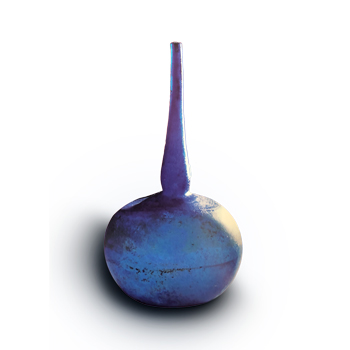
This elegant long-necked bottle is a remarkable example of the refined glassmaking tradition that flourished in Syria during the late Islamic period. It showcases both technical mastery and aesthetic sophistication.
The bottle was made using mould-blown glass, a technique that allowed artisans to create uniform shapes and intricate designs by inflating molten glass into a pre-carved mould. The surface was then richly adorned using two elaborate decorative methods: gilding and enameling.
To achieve the gilded effect, powdered gold was mixed with an organic adhesive—often tree resin—and carefully applied to the glass. Once affixed, the surface would shimmer with a golden sheen. The enameled motifs were produced by applying finely ground colored glass to the surface, which was then reheated to fuse the decoration into place, resulting in a vivid, slightly raised design.
The bottle features delicate multifoil arches and lotus blossoms, elements that suggest stylistic influence from Chinese art, a reflection of the vibrant trade and cultural exchange between East and West at the time.
Syrian enameled glass was highly prized by Crusaders, who brought such pieces back to Europe, and it was also exported to China as a luxury commodity. The cities of Damascus, Aleppo, and Raqqa were key production centers for this type of glasswork, making Syria a leading supplier of enameled glass across the Islamic world.




Leave A Comment