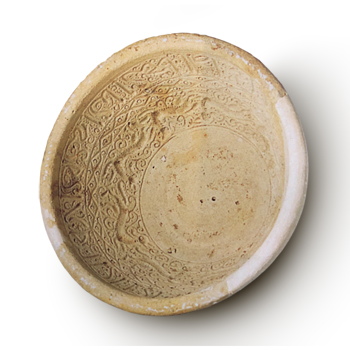
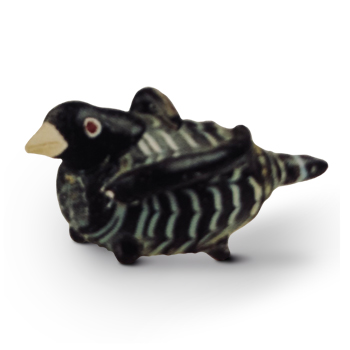
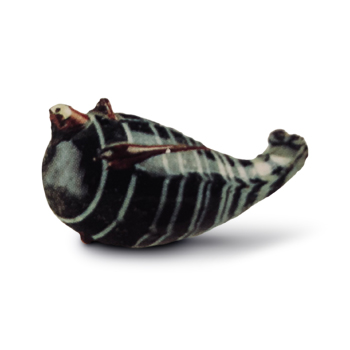
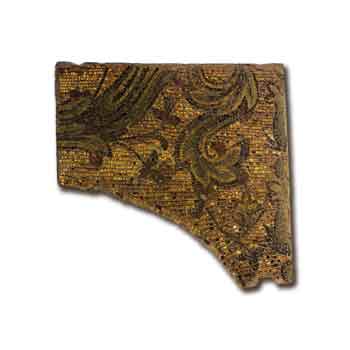
Bowl with camel

- The national museum of Damascus – متحف دمشق الوطني

Description

The camel was a symbol of wealth for Arabs, for the animal had enabled merchants to become rich by forming caravans that transported luxury products, like silk and spices, over great distances. This vessel comes from Raqqa, which is situated on the Euphrates at a place where merchandise brought by boat from China and India via the Persian Gulf was unloaded and put on the backs of camels, which then set off for Aleppo and Antioch. This type of ceramic, with its painted, dark blue decoration under a transparent turquoise glaze, was common in Syria during the Ayyubid period, and Raqqa was the largest center of production. It was widely held at the time that turquoise could ward off disease, which explains why the color was so popular.

  • Site: Raqqa

  • Date: 1200 A.D

  • Material: Ceramic

  • Item Dimensions:  27 x 7 cm

  • Archaeological Mission:

  • National Museum Of Damascus (2011) – Museum Number: DAMASCUS 13423

  • VMS Code: Dam 012-5

Excavation Site Location

  • Syria: land of civilizations / Michel Fortin; Musée de la civilisation (Québec) – Syria’s ministry of culture – 1999

Your Content Goes Here

Your Content Goes Here

  • Michel Fortin’s Syria, Land of Civilizations المديرية العامة للآثار والمتاحف – وزارة الثقافة، الهيئة السورية للكتاب (1999)

Not every record you will find here is complete. More information is available for some works than for others, and some entries have been updated more recently. Records are frequently reviewed and revised, We welcome any additional information you might have.

Record Completion 70%