
Ivory cover of a Jewelry box
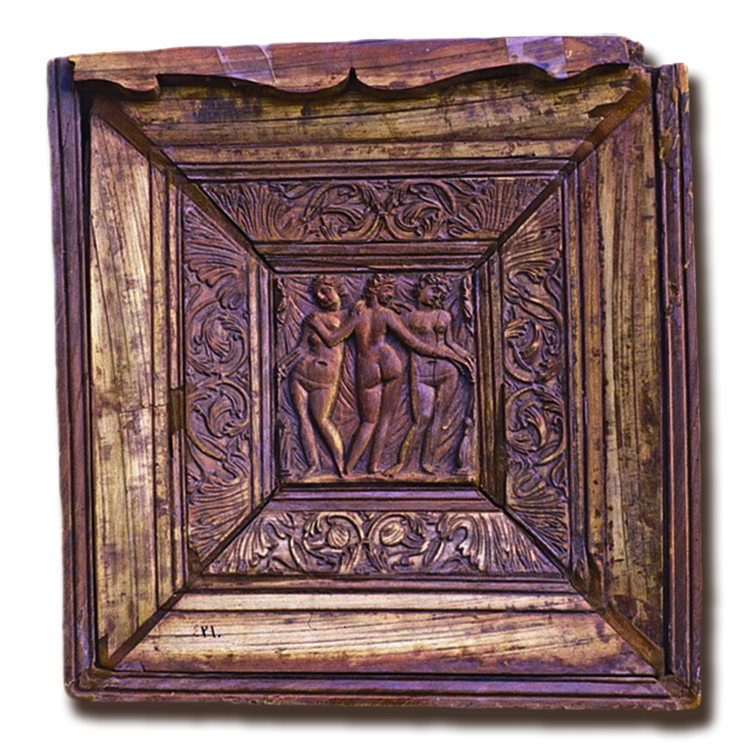
Description
The item was the result of a series of excavation works conducted at the individual tombs in Khesfin (Golan). It was part of a much bigger collection that is now referred to as the treasure of Khesfin. This is a cover of a jeweler box. It’s flat pyramid top depicts a the Graces, nude and clasped in each other arms. The scene is surrounded by a thick frame ornamented with floral motifs.
In Greek and Roman mythology, the Graces were minor goddesses who symbolized beauty, charm, and goodness. The number of Graces varied, though most myths included three sisters: Aglaia (pronounced uh-GLAY-uh; “brightness” or “splendor”), Thalia (pronounced thuh-LYE-uh; “good cheer” or “blossoming one”), and Euphrosyne (pronounced yoo-FROS-uh-nee; “mirth” or “joyfulness”). Other Graces sometimes mentioned were Cleta (pronounced KLEE-tuh; “sound”), Pasithea (pronounced puh-SITH-ee-uh; “shining”), and Peitho (pronounced PYE-tho; “persuasion”).
The Graces were meant to embody the characteristics that ancient Greeks considered attractive in young women. The ideal young woman was not only beautiful but also a source of good cheer and brightness of spirit. Girls were expected to never show an ill mood because it was considered an ugly quality that would repel any possible suitors.








Leave A Comment