
Double Funerary Bust of Bēlsūr and Moqīmū
Description
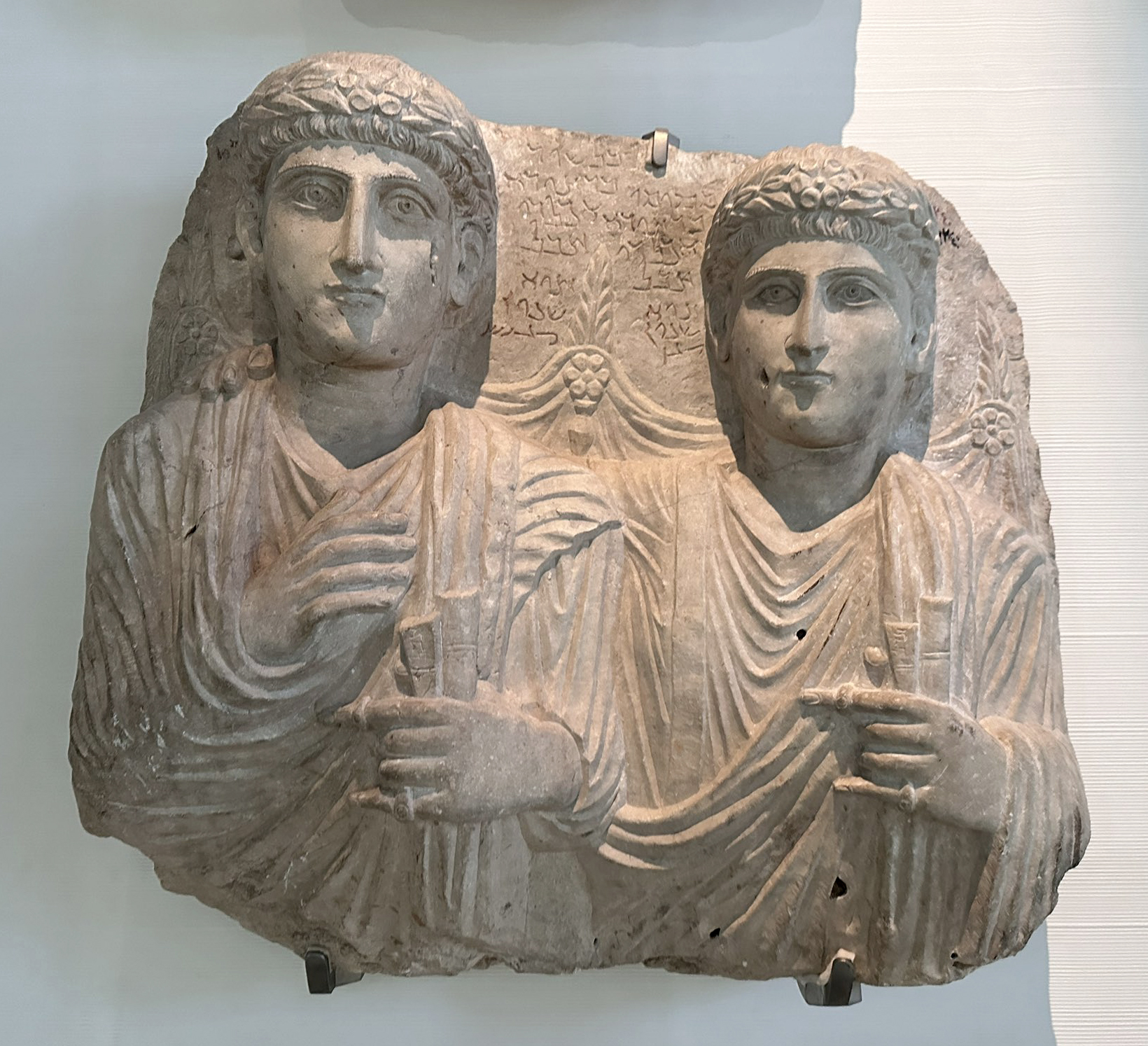
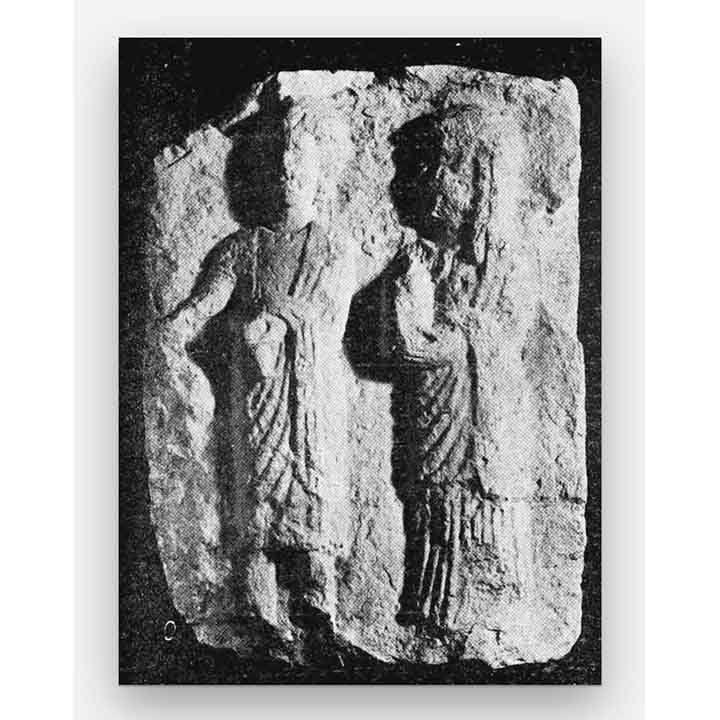
This finely carved limestone relief shows the busts of two young Palmyrene brothers, Baalshur and Mqimo, sons of Ḥeira son of Akladi. It was originally from Palmyra but was recovered in the town of al-Qaryatayn, in the Homs region, where the Akladi family was well known.
The piece follows the Palmyrene funerary tradition of sealing family tomb niches with sculpted reliefs. Baalshur (left), aged 19, is shown in a formal pose with his right hand across his chest, gripping the edge of his garment—a gesture of dignity or reverence. He wears a traditional Palmyrene cloak and tunic, with intricate folds, and a laurel wreath with a central rosette. His face is youthful and clean-shaven, and he holds a scroll inscribed with the Palmyrene-Aramaic word ḥbl (“Alas!”), a typical funerary expression.
Mqimo (right), aged 16, is depicted beside his brother with his right arm gently placed behind Baalshur’s shoulder—a rare affectionate gesture in Palmyrene sculpture, suggesting comfort and familial closeness. He wears similar clothing and also holds a scroll and ring.
Behind them is a delicately carved dorsalium (curtain backdrop), suspended by three six-petaled rosettes. From the central rosette emerges a laurel garland and a small incised amphora, symbols of mourning.
Stylistically, the relief dates to the mid-2nd century CE, closely comparable to pieces in the Louvre and Ny Carlsberg Glyptotek. It is significant both artistically and anthropologically, documenting the Akladi family—whose other members’ busts are held in major international collections, likely from the same tomb group.
Aramaic text, reading and translation;
**On the right:**
**BLŠ WR:** Bēlsūr,
**BR ḤYR’:** son of Hairē,
** ʾ KLĐY:** (son of) Akkāledi,
** ḤBL:** alas!
** ḤY’:** lived
** ŠNYN 19:** 19 years
**On the left:**
**MQYMW:** Moqīmū,
**BR ḤYR’:** son of Hairē,
** ʾKLĐY:** (son of) Akkāledi,
** ḤBL:** alas!
** ḤY’:** lived
** ŠNYN 16:** 16 years.







Leave A Comment