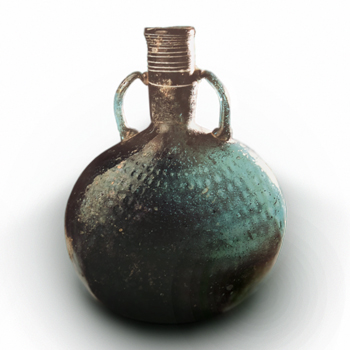
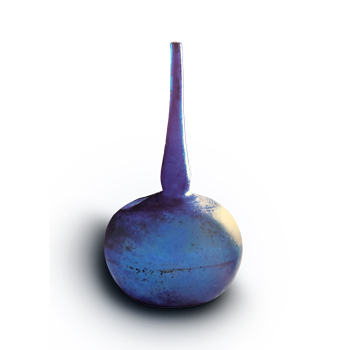
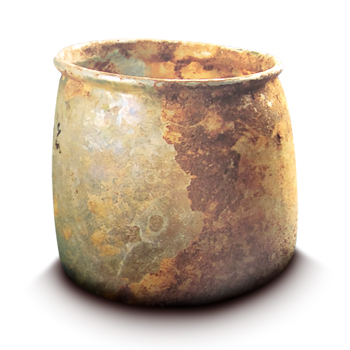
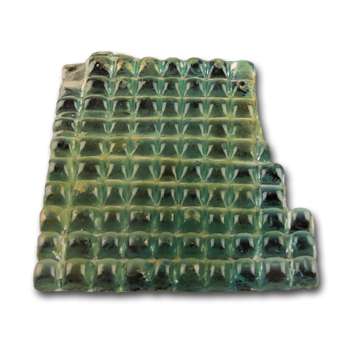
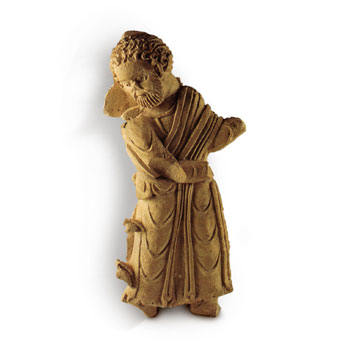
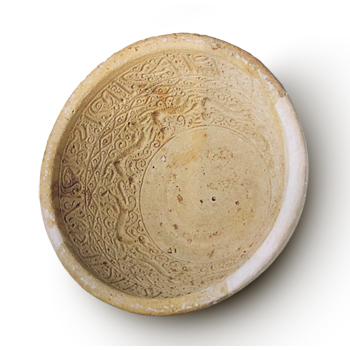
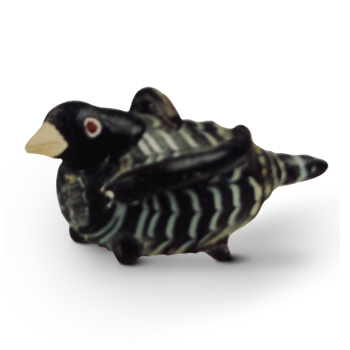
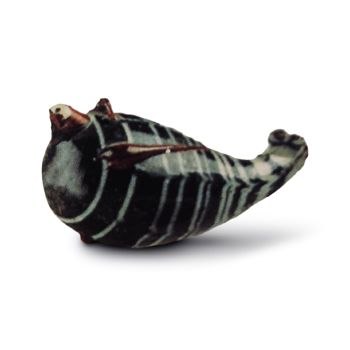
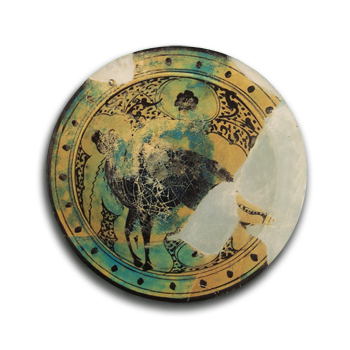
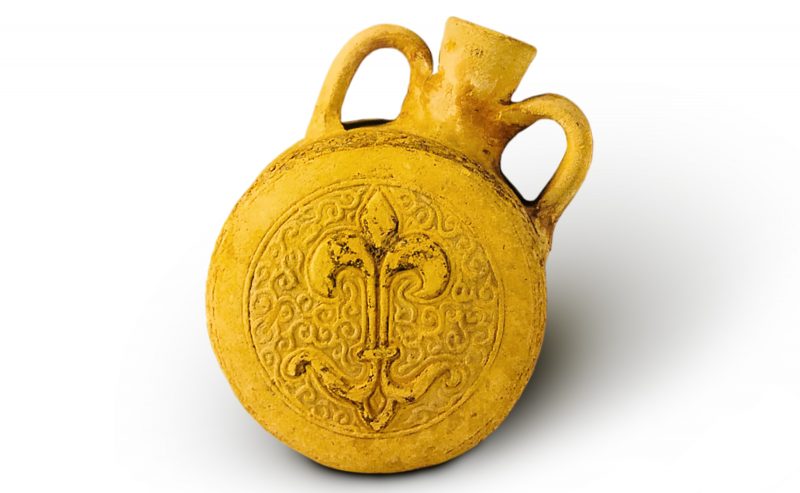
Flask with lilies

- The national museum of Damascus – متحف دمشق الوطني

Description

The body of this vessel, called a pilgrim flask, has moulded decoration on its sides, with a stylized lily in the middle. This motif was often used as an emblem on Ayyubid and Mamluk coins and eventually became the family crest of the Mamluk sultan Qalâ’un. In the Muslim world, the lily motif was first used in the mihrab (or prayer niche) in the Koranic school built in Damascus by the caliph Nur al-Dîn between 1154 and 1173. However, the theme is a very old one in the Near East and was already in use at the time of Ramses III in Egypt.
  • Site: NEAR ALEPPO

  • Date: AD 1300

  • Material: 328 Ceramic

  • Item Dimensions: 22 x 16.5 cm

  • Archaeological Mission:

  • National Museum Of Damascus (2011) – Museum Number: DAMASCUS 1415 A SMC 325

  • VMS Code: Dam 0314

Excavation Site Location

  • Syria: land of civilizations / Michel Fortin; Musée de la civilisation (Québec) – Syria’s ministry of culture – 1999

Your Content Goes Here

Your Content Goes Here

  • Michel Fortin’s Syria, Land of Civilizations المديرية العامة للآثار والمتاحف – وزارة الثقافة، الهيئة السورية للكتاب (1999)
  • Dam 0314 / 328 SLC

Not every record you will find here is complete. More information is available for some works than for others, and some entries have been updated more recently. Records are frequently reviewed and revised, We welcome any additional information you might have.

Record Completion 70%