
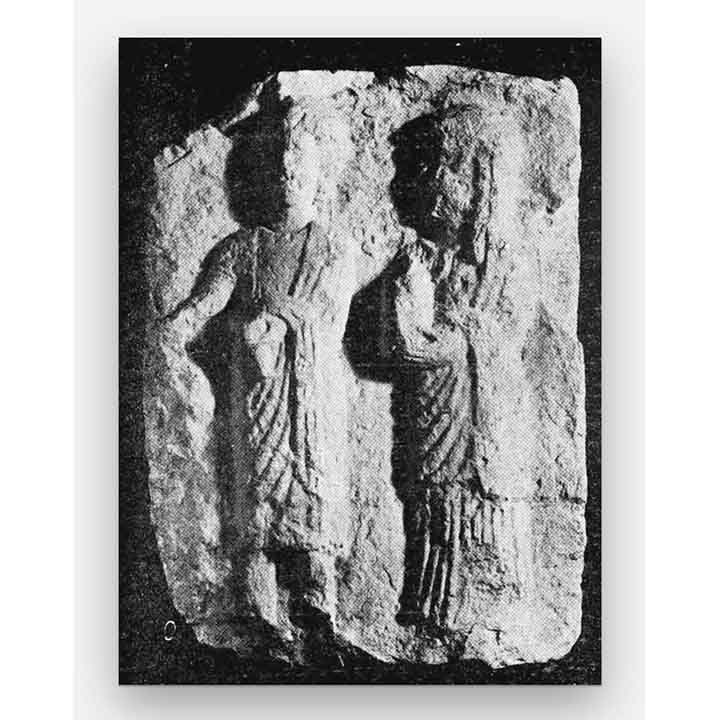
Basalt Statue of the Nabatean god Dushara

Description
The statue was excavated from Harran al-‘Awamid (Arabic: حران العواميد) is a town in southern Syria, administratively part of the Rif Dimashq Governorate, located southeast of Damascus.
Dushara, also transliterated as Dusares, was a pre-Islamic Arabian god worshipped by the Nabataeans at Petra and Madain Saleh, where he was considered the patron deity. His worship reached Palmyra and Mecca as well. Safaitic inscriptions suggest that he was the son of Al-Lat and participated in celestial assemblies with other gods. In Nabataean sources, his name is spelled dwšrʾ. Classical Greek sources referred to him as Δουσάρης (Dousárēs), and in Latin as Dusares.
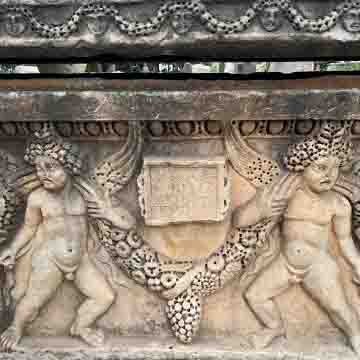
The original meaning of Dushara’s name is disputed. According to the early Muslim historian Hisham ibn al-Kalbi, the name could be etymologically derived from Dhū l-Šarā (Arabic: ذو الشرى), possibly meaning “the one of the Shara (mountains north of Petra).” Some scholars accept this interpretation, viewing Dushara as more of a title than a proper name. He was associated with Zeus in Greek times, being the chief deity in the Nabataean pantheon, and also with Dionysus.
A shrine to Dushara was discovered in the ancient harbor of Puteoli in Italy, reflecting the Nabataean presence in the region during the mid-1st century BCE. The cult of Dushara persisted into the Roman period and possibly into the Islamic period. Hisham Ibn Al-Kalbi mentioned this deity in the Book of Idols, stating that the Banū al-Hārith ibn-Yashkur ibn-Mubashshir of the ʻAzd had an idol called Dū Sharā. Safaitic inscriptions indicate animal sacrifices to Dushara, invoking his assistance for various services.








Leave A Comment