Description
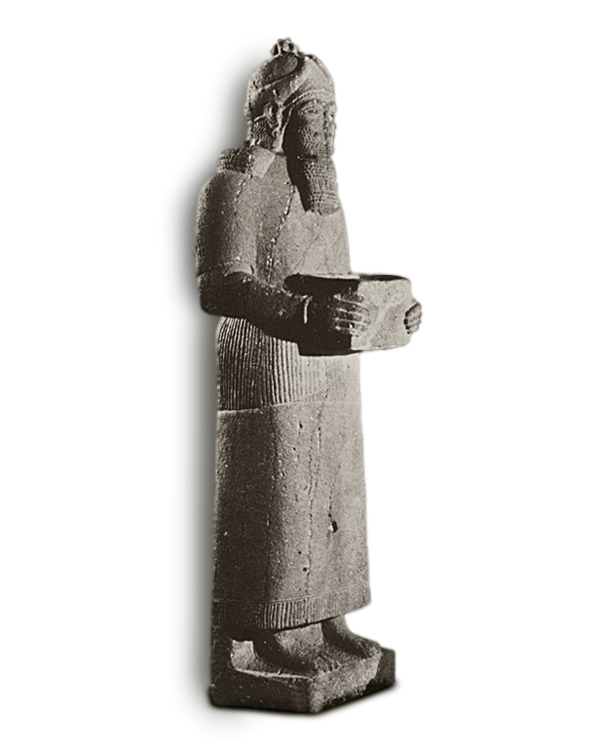
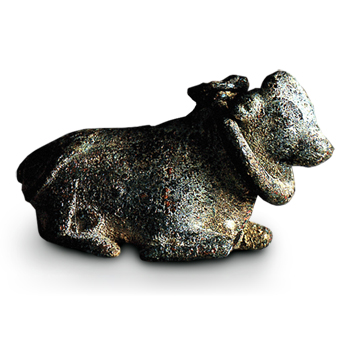
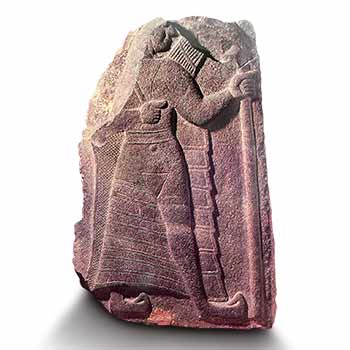
From the ancient Near East only a few statues of deities are preserved. Since the depictions of gods in the large temples were richly decorated with gold and jewels, it is rare to find such works in their original splendor. This statue from the Ishtar Temple of the provincial Assyrian town of Hadatu is one of six similar statues once housed there. He holds a box in his hands which probably was meant to receive votive gifts. His short-sleeved robe, with a fringed shawl wrapped around it, and his hair and beard show the Assyrian fashion of the eighth century B.C. The bullhorns on his headdress indicate his divine status, but since he wears only two horns, he must have had an inferior position in the pantheon. Rows of such lower deities were often placed at the entrance to Neo-Assyrian temples. This statue was carved out of a square block of basalt, and the body features are hardly recognizable under the garment. These statues from Arslantash were locally produced in the provincial style, although the models for them were Assyrian from the upper Tigris.







Leave A Comment