
Decorative plaque with sphinx
Description
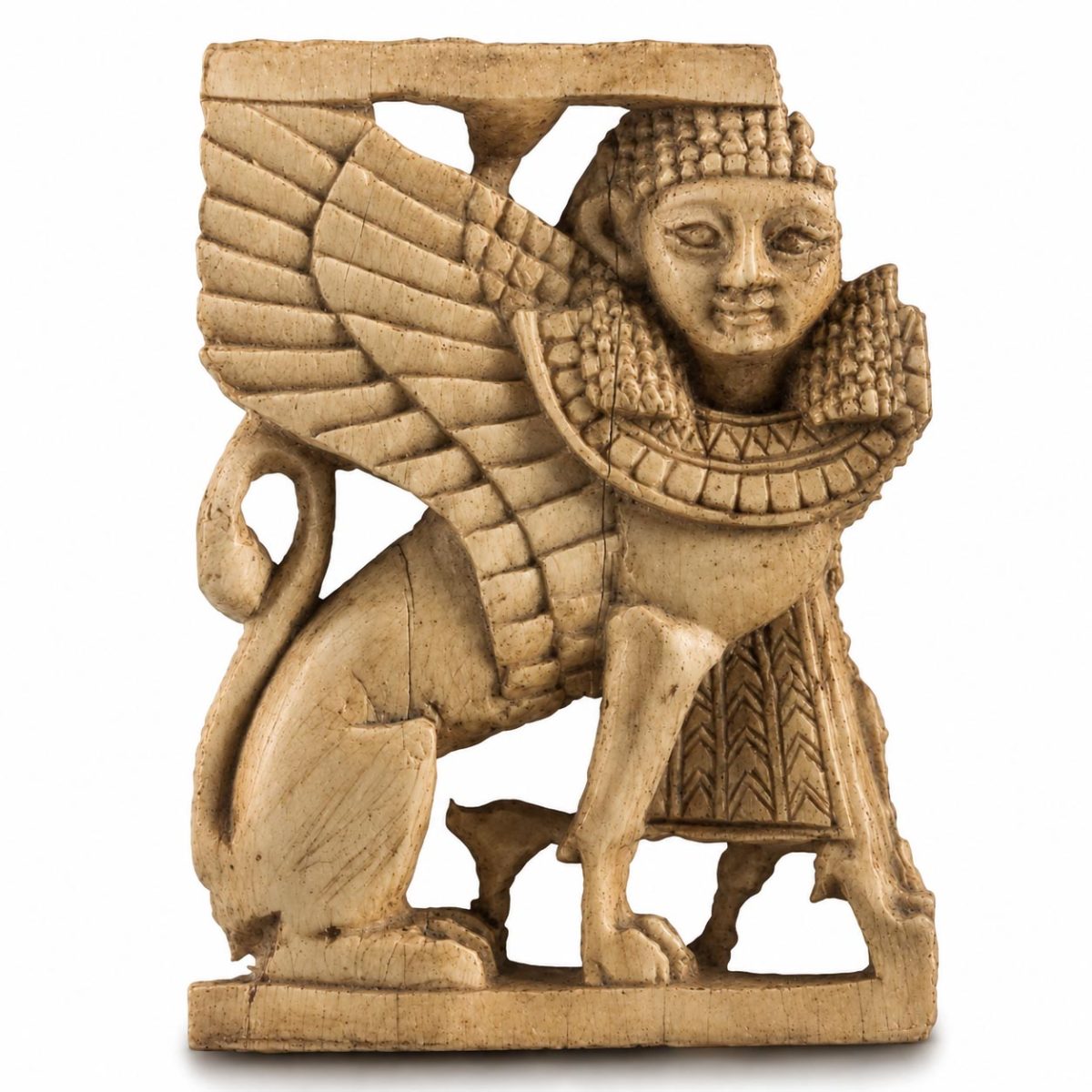
This carved ivory plaque once formed part of the decorative veneer attached to a piece of ceremonial furniture. At its center is a sphinx—a composite creature with the body of a winged lion and the head of a human—an image ultimately derived from Egyptian artistic tradition and adapted by Aramaean craftsmen within their own decorative repertoire.
Although the plaque was discovered in the Assyrian governor’s palace at Hadatu (modern Arslan Tash), it was almost certainly not produced there. Scholars have shown that it belonged to a group of luxury ivory furnishings taken by the Assyrian army as war booty from Aramaean royal palaces following their conquest, particularly after the capture of Damascus in 732 BC. One comparable plaque even bears the name of Hazael, king of Aram, providing important historical evidence for this interpretation.
Beyond its decorative function, the plaque illustrates the circulation of luxury objects across the ancient Near East and the movement of artistic ideas between Egypt, the Aramaean kingdoms, and Assyria during the Iron Age. It stands as an example of the exceptional craftsmanship achieved in Levantine ivory carving.





Leave A Comment