
Relief of Mithras slaying the bull

Description
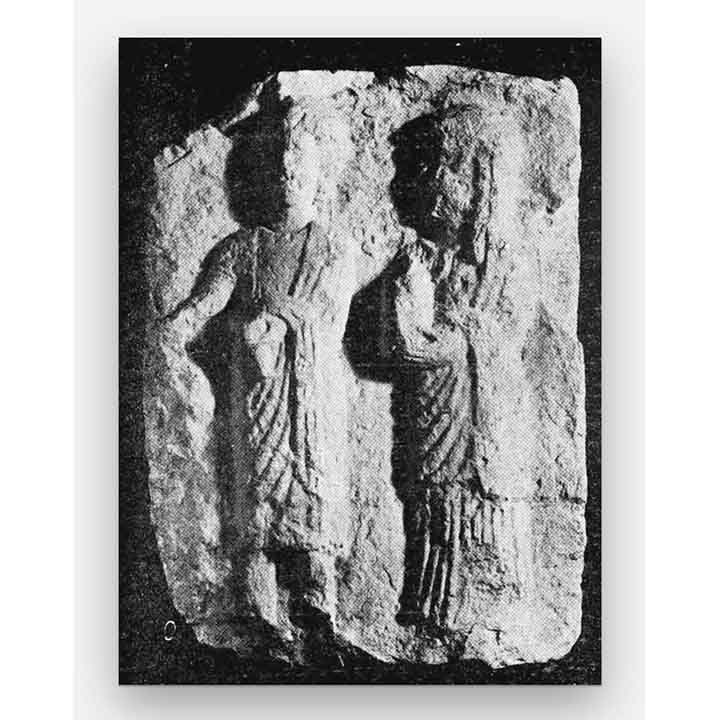
This basalt relief from Sīʿ (Seeia) depicts the tauroctony, the characteristic image of the Mithraic cult in which Mithras sacrifices the bull. Mithras occupies the center of the composition, wearing a short tunic and the distinctive Phrygian cap. He kneels across the bull’s back, restraining the animal while performing the sacrifice. The relief belongs to the evidence for the cult of Mithras at Sīʿ during the Roman period.
The archaeological significance of this relief becomes clearer when considered together with a second, considerably larger Mithraic relief from Sīʿ, also preserved in the National Museum of Damascus (catalogued as IGLS XVI 272a). It was discovered at the entrance to a cave north of the site, reportedly on the slope of a basalt hill, and was carved on a monumental basalt block measuring approximately 106 × 112 cm.
Despite the losses and damage to the stone, the principal elements of the scene remain clearly recognizable. The compact arrangement of the figures and the strongly modeled forms give the composition considerable movement, particularly in the sweeping cloak and the opposing directions of Mithras and the bull. The relief bears no inscription.
As a representation of the tauroctony, the relief belongs to the central iconography of Mithraic worship. The scene of Mithras slaying the bull was repeatedly represented in Mithraea throughout the Roman world and formed the principal visual image around which the cult’s sacred space was organized. At Sīʿ, the survival of this relief provides direct material evidence for the presence of Mithraic religious imagery within the broader sacred landscape of the site.







Leave A Comment