Fragment of a tunic

- The national museum of Damascus – متحف دمشق الوطني

Description

Linen does not take dye well and was therefore used unbleached, neither whitened nor colored. Made from flax, a plant that grows in the Palmyra region, linen was used to make clothing in antiquity very early on. Although the color of natural linen is not very showy, people developed ingenious methods for weaving it. The arms and bodice of this tunic were woven in one piece on a loom that must have been 250 centimeters wide. Decorative motifs in dyed wool were appliquéed on the tunic afterwards. This is the oldest example of a decorated tunic found in Syria.
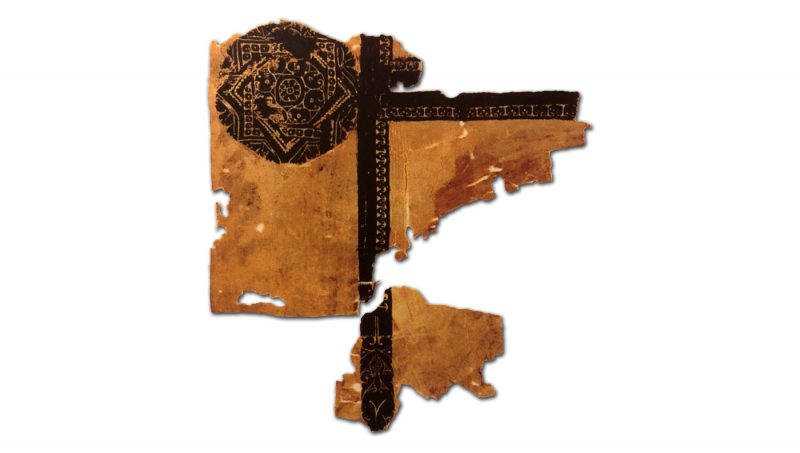
  • Site: TADMOR, ANCIENT PALMYRA: ELAHBEL TOWER TOMB 20

  • Date: AD 103

  • Material: Linen and wool

  • Item Dimensions: 41 x 51 cm

  • Archaeological Mission:

  • National Museum Of Damascus (2011) – Museum Number: DAMASCUS V20 (T20)

  • VMS Code: Dam 0324

Excavation Site Location

Your Content Goes Here

Your Content Goes Here

Your Content Goes Here

Your Content Goes Here

Not every record you will find here is complete. More information is available for some works than for others, and some entries have been updated more recently. Records are frequently reviewed and revised, We welcome any additional information you might have.

Record Completion 70%