Description
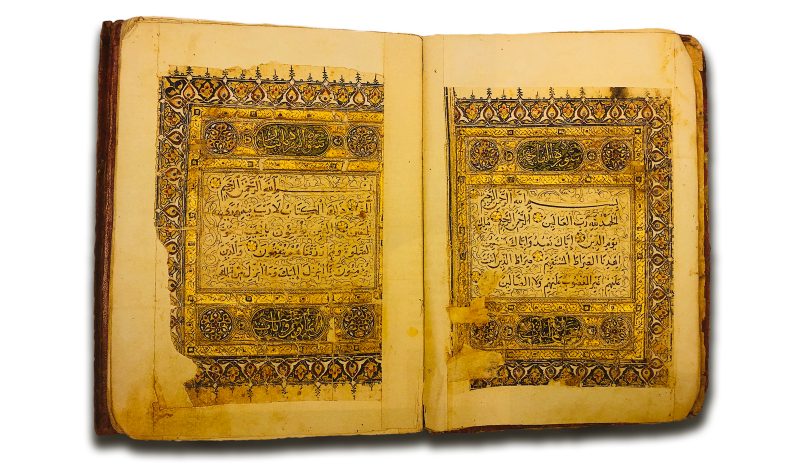
Each page of this Koran contains five lines bordered by blue and gold illumination, with large bands above and below giving the title of the sura. In the text itself, golden rosettes separate the verses. Figurative imagery is prohibited by Koranic precepts. The earliest surviving manuscripts of the Koran date from the second half of seventh century. The text of the Koran was given a definitive form thanks to the Umayyad caliph of Damascus, Abd Almalek (685-705), who standardized Arabic spelling when he decreed that Arabic should be the language of administration for the entire Islamic Empire. This manuscript is part of a Koran in 30 volumes. As of the ninth century, the 114 sura of the Koran were arbitrarily divided into 30 parts of the same length, each contained in a manuscript. The division into 30 parts was considered advantageous because it corresponded to the number of days in the lunar months of the Muslim calendar.






Leave A Comment