Description
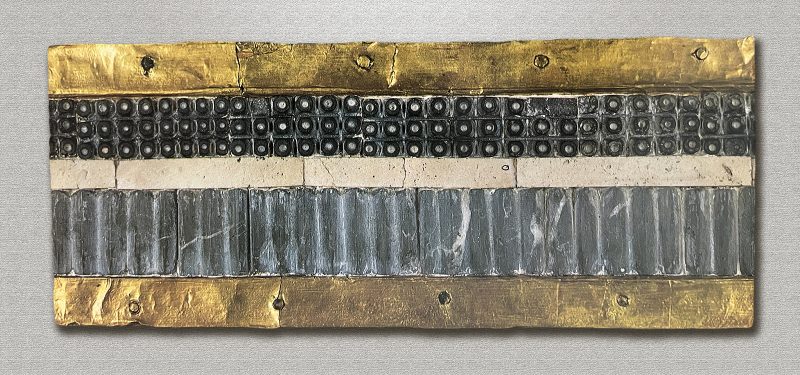
This frieze assembled from different materials is an example of early interior decoration. Originally it decorated the upper part of an altar in a temple. The individual pieces were once mounted on a wooden backing, of which nothing remained when it was excavated. The edges at the top and bottom formed a molding which was covered with gold foil nailed into place with gold-headed silver nails. The different-colored stone bands were put together from rectangular strips that had perforations at the back so that a thin copper wire could be threaded through them and attached to the wooden backing.
The frieze was not only a decorative ornament; it depicted a type of façade common on temples and public buildings at the time. Placed directly below the roof, such facades often had a row of mosaic made from clay strips interspersed with black-painted heads. Under the mosaic the wall had receding niches. The green slate in our example only partly succeeds in creating the illusion of niches. The use of different-colored materials for an object was popular in the ancient Near East, especially in ancient Sumer and Elam (southern Iraq and southwestern Iran).






Leave A Comment