
Mamluk Emblem (Runk)
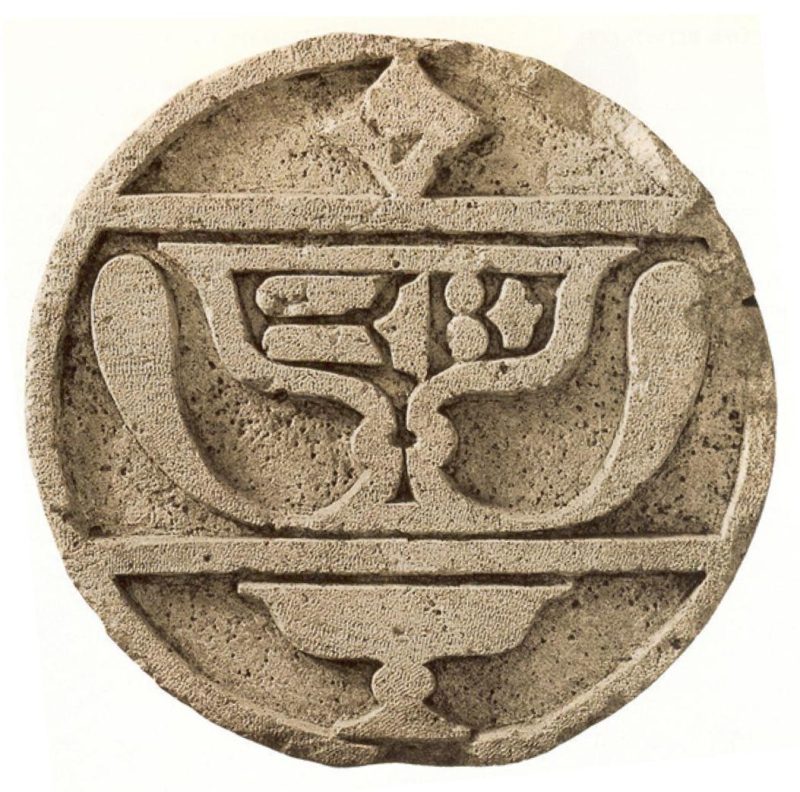
Description
Heraldic devices (runk, plural arānīk) served as visual identifiers of an emir’s rank and office within the Mamluk administrative system. Each symbol denoted a specific duty: the cup for the sāqī (cup-bearer), the napkin or towel (mandīl) for the jamdār (chamberlain or keeper of garments), and the pen case for the dīwādār (secretary). Such emblems appeared on architecture, metalwork, glass, textiles, and ceramics, forming a codified visual language that conveyed hierarchy and authority without inscriptions.
Description:
The roundel is carved in relief with three horizontal fields.
-
The upper field shows the mandīl, symbol of the chamberlain (jamdār).
-
The middle field contains a stemmed cup, emblem of the cup-bearer (sāqī), beside a pen case, the sign of the secretary (dīwādār); side scrolls have been interpreted as paired powder horns.
-
The lower field carries a smaller cup.
This combination, frequent in the late Burjī (Circassian) period, summarized multiple offices held by one official in a single composition.
Historical Context:
Comparative epigraphic and architectural evidence shows that the tri-field emblem spread under Sultan al-Ashraf Qāytbāy (r. 1468–1496 CE / 872–901 AH), first used by him as an officer and later granted to trusted amirs. It remained in use until the fall of the Mamluk Sultanate in 1517 CE / 922 AH. In Aleppo, closely related emblems occur on buildings commissioned by Azdamar (Azdamir)—governor in 1479 and 1484–1493—and by Khayr Beg b. Bālbāy, both associated with Qāytbāy. The stylistic and technical traits suggest Aleppine workmanship; the findspot is unknown.


Leave A Comment