
Apothecary Jar
Description
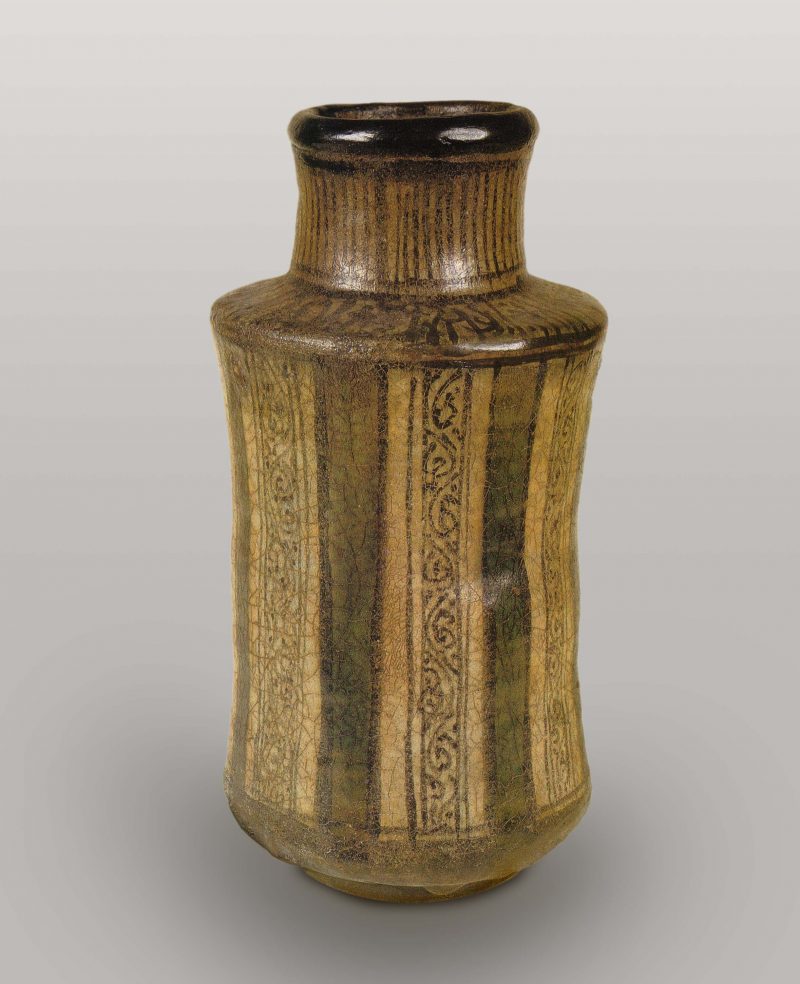
This elegant ceramic vessel is characterized by its waisted cylindrical body — a form specifically designed to facilitate easy handling and removal from shelves, a practical hallmark of the albarello type. The jar rests on a flat base and gradually rises into a straight neck that terminates in a slightly flared and black-glazed rim.
The surface decoration is dominated by a rhythm of vertical bands that alternate across the body in a carefully calculated composition. These bands consist of:
- Plain vertical stripes in a dark tone (ranging between olive green and faded black), which function as visual dividers.
- Decorated bands filled with intricate vegetal scrollwork motifs — finely executed, showcasing a refined ornamental vocabulary typical of the Damascene ceramic tradition.
This arrangement creates a measured visual rhythm, lending the jar a sense of calm symmetry and balance. The overall coloration — a warm golden-brown tone — is the result of a transparent glaze that enhances the contrast and depth of the painted decoration beneath, typically rendered in black and green pigments.
Cultural and Historical Context:
This jar exemplifies the craftsmanship of the famed Damascus ceramic ateliers, which flourished during the 13th and 14th centuries. Damascus was at that time a leading center of ceramic production in the Islamic world, known for the sophistication of its decorative programs and the high quality of its glazes.
Apothecary jars from Damascus were highly prized in Europe, where they were used to store rare spices, medicines, and aromatic materials. Archival records from Italy, France, and Spain during the 14th and 15th centuries attest to the widespread import and esteem of these vessels. Following the devastating sack of Damascus by Timur in 1401 CE, the Spanish ceramic center of Valencia assumed production of albarelli, directly inspired by Damascene models — a testament to the lasting influence of Syrian ceramic aesthetics.
Significance:
This jar stands as a rare surviving specimen of a refined and highly functional ceramic tradition — one that united utility with beauty. Its form reflects ergonomic efficiency, while its ornamentation reveals the aesthetic and technical sophistication of its makers. As such, the vessel offers valuable insight into medieval Syrian craftsmanship and serves as tangible evidence of the vibrant cross-cultural exchanges that connected the Islamic East and Christian West during the Middle Ages.


Leave A Comment