
A Ritual Ceramic Object from the Late Halaf Period
Description
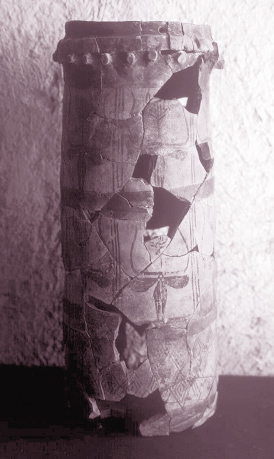
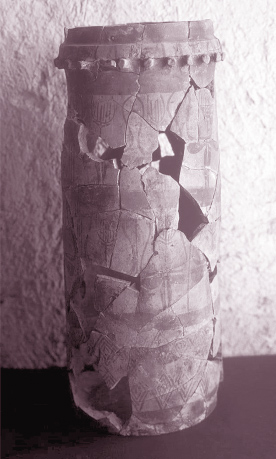
This ceramic object originates from the site of Shams ed-Din Tannira, on the eastern bank of the Euphrates River in the Euphrates Lake (Lake Assad) region, and dates to the Late Halaf period, a developed phase of the Neolithic in northern Mesopotamia during the mid–sixth millennium BCE (c. 5600–5300 BCE). Formerly part of the collection of the Raqqa Archaeological Museum (current location unknown), the vessel is regarded as exceptional within the Halaf ceramic tradition due to its unusually tall cylindrical form and its dense, highly structured decorative program. These characteristics set it apart from the standard repertoire of Halaf pottery and suggest a function beyond everyday domestic use. The circumstances of its discovery and deposition further support its interpretation as an object associated with ritual practices rather than ordinary household activity.
The vessel is remarkable for its tall cylindrical shape, which has no close parallels within the known Halaf ceramic repertoire. Its exterior surface is entirely covered with an elaborate decorative program composed of horizontal bands combining fine geometric motifs with repeated representations of bucrania (bull skulls). In Neolithic symbolic systems, bucrania are widely associated with ritual power, fertility, and communal ceremonial practices, and their prominent display on this object underscores its symbolic rather than utilitarian character.
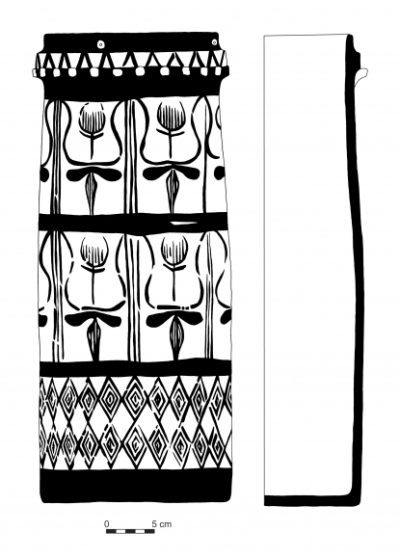
Detail of one metope with double bucrania on the Halafian cult object from Shams ed-DinTannira (scale 1:1) Archives of Tell Sheikh Hassan 1990
Equally significant is the archaeological context of discovery. The object was deposited in a shallow pit scarcely larger than the vessel itself, filled with dark, ash-rich soil and lacking any associated finds or domestic debris. The vessel also bears clear evidence of deliberate breakage followed by exposure to fire, including burn marks along the fracture surfaces. This sequence strongly supports the interpretation of a purposeful ritual deposition involving intentional destruction, often described as a “closing” or termination ritual.
On the basis of these observations, the original study argues that the object functioned within a non-institutional ritual framework, practiced at the household or small community level, in a cultural context that predates the construction of formal religious buildings. Two main functional hypotheses are proposed: the vessel may have served as a large ceremonial container reserved for special occasions, or alternatively as a percussion instrument, possibly a drum, used in ritual performances.
Formerly displayed in the Raqqa Archaeological Museum, the artifact is now considered among the Syrian cultural objects whose current whereabouts remain unknown. The Virtual Museum of Raqqa wishes to express its sincere gratitude to the author of the original research, who kindly granted permission for adapted excerpts of her study to be published, ensuring continued access to the knowledge of this unique Halafian object despite the uncertainty surrounding its fate
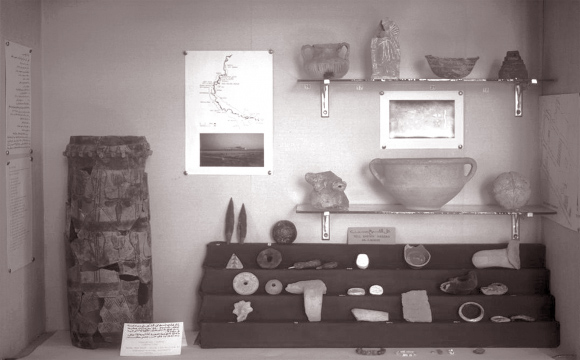
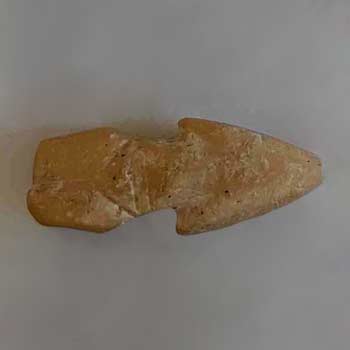
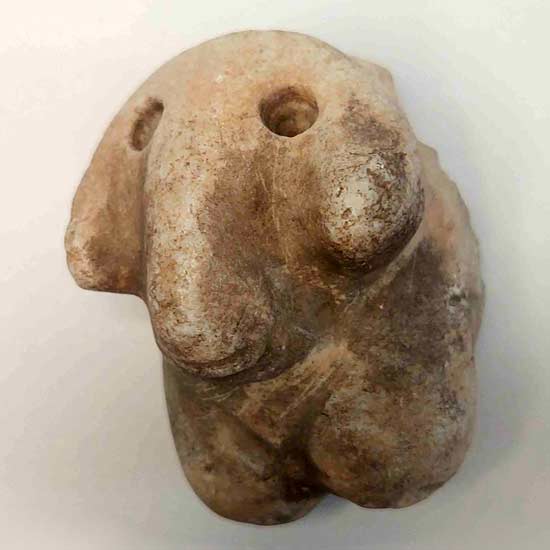
Presentation of the cult object from Shams ed-Din Tannira (left), together with finds from Tell Sheikh Hassan (right) Archives of Tell Sheikh Hassan 1990


Leave A Comment