
Bread Stamp
Description
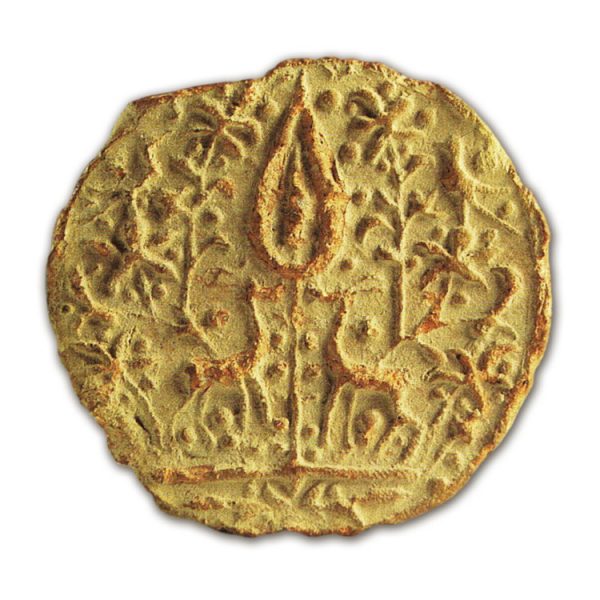
From about the fourth century Christians used different stamps for regular bread and for bread for the communion. It is, however, often impossible to distinguish clearly between the two types of bread stamps. Crosses and animal symbols such as fish and stags appear on both kinds, and without an inscription it is not clear whether the stamps were meant for communion or not. In our example the main scene depicts two gazelles standing on either side of the tree of life; all the other design elements, such as birds and plants, are arranged symmetrically around this central tree. The carefully worked small globes distributed over the field indicate that the stamp was made in the second half of the seventh or perhaps the beginning of the eighth century. The composition of the scene has parallels in Syrian mosaics (see Cat. No. 232) and in miniature art from the fifth and sixth centuries. If this stamp was made for Christians, the scene could be interpreted as a heavenly one. But the date of origin requires caution, since the iconographic elements and the structure of the design have Islamic parallels. Therefore, we cannot be sure whether this bread stamp was commissioned by Christians.
*(Literature: G. Galavaris)




Leave A Comment