Description
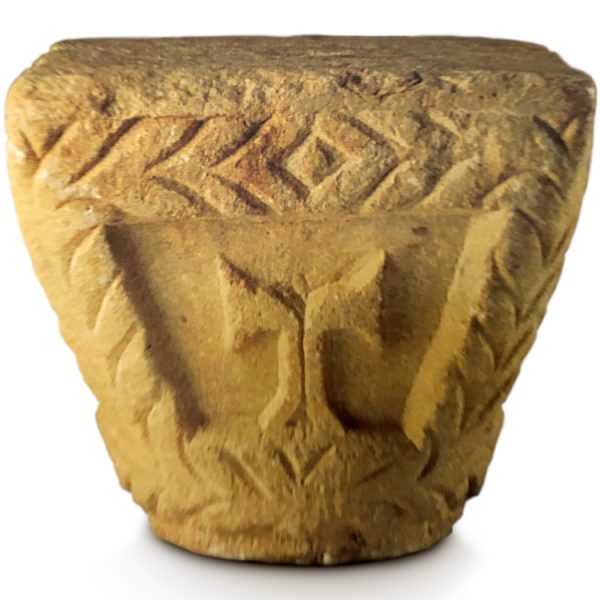
Given the small size of this capital, it was probably originally part of a ciborium, or sort of canopy that covered the tabernacle of the high altar in early Christian churches. It was very likely imported from a region of Asia Minor (Turkey) where this style of capital was developed. On each of its four faces there is a sculpted representation of either a Latin cross with splayed ends or a five-lobed vine leaf. However, the church to which it belonged was destroyed, along with many other buildings, when the Abbasid caliph Harum al-Rashid transferred the capital of his empire from Baghdad to Raqqa and had much of the city rebuilt (AD 796-808). The architectural detail shown here was integrated into an Islamic building, which is why the topmost arm of the cross has been removed.




Leave A Comment