Jewelry Mold from Ugarit (Ras Shamra)

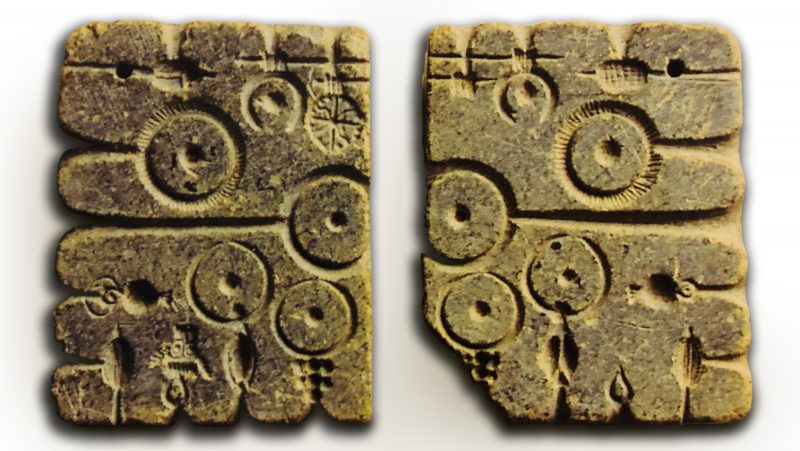
Chlorite jewelry mold, 9 x 7 x 2 cm, with channels for casting beads and rosettes. Excavated at Ras Shamra (Ugarit), Syria, c.1300 BC. National Museum of Damascus, inv. DAMASCUS 5209.

Description

The stone used to make jewelry moulds like this one is of ten called steatite by archaeologists, but it is actually chlorite. It is an ideal stone for moulds, since it does not crack or break on direct contact with heat and can be finely sculpted into shapes for beads, rosettes and other delicate gold items. The moulds shown here would have had a matching part. The two halves were placed one on top of the other and held in place with staples that fit into holes at the corners. Then the molten metal was poured through the little channels that run from the sides to the jewelry forms.
  • Site: RAS SHAMRA, ANCIENT UGARIT/TELL

  • Date: 1300 B.C

  • Material: Chlorite

  • Item Dimensions: 9×7 x 2 cm/

  • Archaeological Mission:

  • National Museum Of Damascus (2011) – DAMASCUS 5209

  • VMS Code: Dam 076-2

Excavation Site Location

Your Content Goes Here

Your Content Goes Here

Your Content Goes Here

Your Content Goes Here

Not every record you will find here is complete. More information is available for some works than for others, and some entries have been updated more recently. Records are frequently reviewed and revised, We welcome any additional information you might have.

Record Completion 70%