
Bronze Statuette of a Standing Male Figure
Description
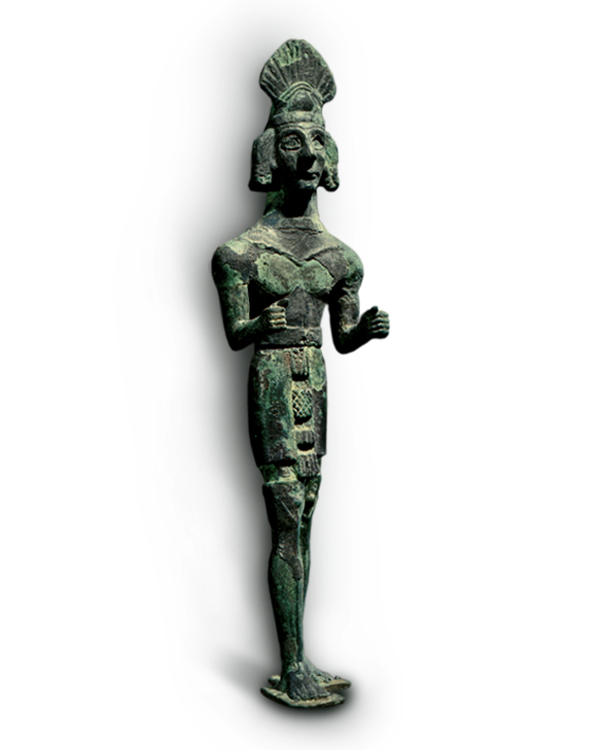
The object represents a standing male figure rendered in bronze. The figure is shown upright in a rigid frontal stance. The proportions are elongated, and the modeling privileges overall form rather than detailed anatomical articulation. The head and hair are more carefully treated than the torso, and elements of dress are indicated through simplified surface definition. The stance and construction emphasize verticality and stability.
The surface preserves traces of a thin silver plating. This surviving metallic layer demonstrates that the figure was originally enhanced with applied silver, altering its visual appearance and possibly highlighting specific features. The presence of this plating indicates a deliberate surface treatment beyond the base bronze structure.
Close examination reveals fastening points and small nails or rivet marks. These technical details suggest that certain components may have been attached separately or reinforced after the primary formation of the figure. The method of manufacture is attributed to hammered metalworking, based on observable surface characteristics and working traces. The metal appears to have been shaped and finished through controlled hammering rather than relying solely on casting processes.
The identity of the figure is examined through comparative analysis. The possibility that it represents an ordinary individual or a king is considered and set aside. On the basis of posture, headgear, and stylistic parallels with Levantine and Syrian divine types, the figure is identified as a representation of Baal, or a closely related Syrian storm or warrior deity. The iconographic comparison situates the statue within a regional religious tradition rather than within Mesopotamian royal imagery.
Chronologically, the statue is assigned to the transition between the end of the second millennium and the beginning of the first millennium BCE.
In comparison with other Syrian bronze figurines discussed alongside it, this example is distinguished by its larger size, the refinement of its execution, the presence of silver surface treatment, and the form of its wide and prominent crown. These characteristics set it apart within the corpus of Syrian bronze divine representations.



Leave A Comment